Wastewater Service Laterals: The Most Neglected Sewer Pipes

Lateral ownership, common failure points, regulatory drivers, and trenchless repair options for one of the most overlooked parts of the wastewater collection system.

By Michelle Beason, PE, National Plant Services, Inc.

Originally published in the 2020 WESTT Western Regional No-Dig Review. View the original article PDF.

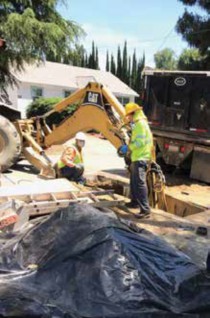
Service laterals often sit under pavement, landscaping, and private property, making ownership and repair responsibilities more complicated.

In the United States, there is estimated to be over 800,000 miles of public sewers, plus an additional 500,000 miles of private sewer laterals connecting homes and businesses to the public system. These small pipes play a large role in safely moving wastewater to treatment, reuse, and disposal.

Public agencies regularly maintain and inspect public sewers, but service laterals have often been overlooked because ownership is commonly private. Many property owners do not realize they own their sewer lateral until a backup, repair requirement, or property transfer brings the issue to the surface.
 

Why Laterals Get Missed

Lateral ownership varies by state and can even differ between neighboring cities. That ownership ambiguity is one reason repairs are delayed. Before trenchless repair options became common, fixing a failed lateral usually meant excavation and replacement, often through pavement, landscaping, or private improvements.

  • The property owner may own the entire lateral from the structure to the main sewer.
  • The city may own the portion from the main to the property line, while the owner is responsible from the property line to the structure.
  • In some jurisdictions, the city or agency owns the entire lateral.

Common Lateral Problems

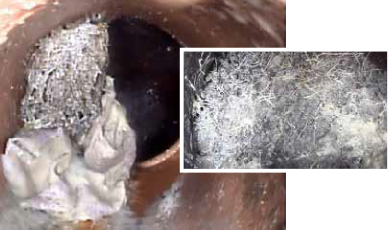
Clay pipe root intrusion

Older sewer laterals were typically made of cast iron or clay. Many have reached the end of their useful life and need repair or replacement. Cast iron can corrode until holes develop in the pipe wall, creating entry points for roots. Clay pipes can crack, settle, develop offset joints, and eventually collapse.

Cast iron corrosion

These failures affect more than the individual property. Wastewater can exfiltrate into surrounding soil, groundwater, streams, or beaches. Failed laterals can also allow groundwater infiltration during wet weather, increasing collection-system flow and treatment costs.

Elevated E-coli levels have been found in the soil of cities with the worst lateral problems, and regulatory programs increasingly require agencies to locate and eliminate pathogen sources entering waterways and beaches.
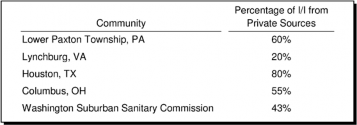
 
Estimated I/I associated with private sources. Source: Report for Sanitation District No. 1 of Northern Kentucky, October 2006.

Many cities and agencies did not previously connect wet-weather flow surges to failed sewer laterals. After millions of feet of public mains were lined with only modest reductions in infiltration, more attention shifted to private laterals and the role they play in collection-system performance.
 
Up to 80 percent of all infiltration and inflow into collection systems can be from service laterals.

Regulations Are Catching Up

More public agencies and cities are adopting programs that require homeowners to inspect and repair failed sewer laterals. Inspection requirements vary, but commonly include CCTV inspection or an air test.

For example, the East Bay Municipal Utility District and contributing cities implemented the Regional Private Sewer Lateral Ordinance beginning in 2011. The program applies during property transfers, certain building or remodeling projects, and water meter size changes. If the lateral fails verification, it must be repaired before compliance is issued.

Some agencies are also choosing to repair private laterals themselves as part of broader infiltration reduction and maintenance programs. Others use cost-sharing or payment plans to reduce the financial burden on homeowners.

Repair Options

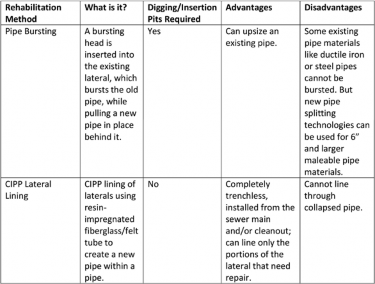
Lateral rehabilitation methods comparison

A CCTV inspection by a NASSCO LACP certified operator is typically the first step. Once the defects and overall condition are understood, agencies and contractors can select the repair method that fits the lateral condition and site constraints.

Trenchless alternatives are especially useful where excavation would disturb pavement, landscaping, or private improvements.

 

CIPP Lateral Lining

The NASTT Rehabilitation Methods Good Practices Guidelines is a useful source.

CIPP lateral lining is a versatile, cost-effective, fully trenchless process. It can repair the lateral-to-main connection, the entire lateral, a portion of the lateral, or a combination of those areas without insertion or extraction pits.

The method can be used on a range of pipe materials and on lateral diameters from 3 to 8 inches.
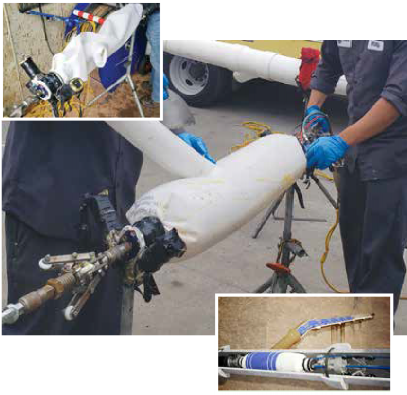
Lateral can be lined in one step with a remotely operated inflatable packer.

Some systems use a remotely operated inflatable packer for lateral-to-mainline connection repairs and can line the connection plus the lateral in one step. Main-to-House liners can repair lengths of up to 100 feet from the mainline sewer.

This makes lateral lining a practical option for cities and agencies that want repairs completed from the public right-of-way without entering or disturbing private property.
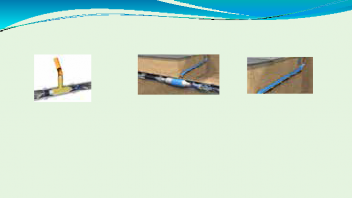
 
Three approaches to lateral lining. Source: Epros Trelleborg System.

Portable inversion drums are another common approach, installing lateral liners from a cleanout back toward the public sewer main. Long inversion lengths can line up to 300 linear feet in one step.
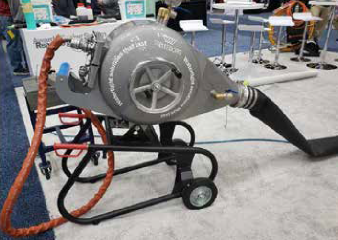
Portable inversion drum

Lateral lining uses inversion to place a resin-impregnated liner into the existing pipe. Once inverted, steam is typically used to cure the resin and create a fully structural new pipe within the existing lateral.
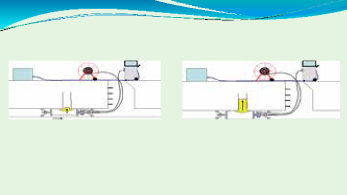
 
Inversion process

The inversion process places the liner into the lateral while maintaining control from the access point. Proper positioning, pressure, resin selection, and curing are all critical to creating a tight, durable structural repair.
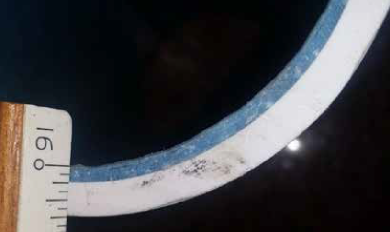
Liners impregnated with epoxy resins create a tight frictional interface between the liner and host pipe.

Resin-impregnated liners create a new pipe inside the host pipe. The result can restore structural integrity, reduce infiltration, and limit further root intrusion without open-cut replacement.


 

Conclusion

Private sewer laterals are critical to collection-system performance, but they are often neglected until failure creates a visible problem. Inspection and repair programs help reduce infiltration, lower treatment costs, protect water quality, and prevent pathogen migration from damaged laterals into surrounding soils and waterways.

For agencies willing to take a more proactive approach, trenchless lateral lining provides a practical repair path that can often be completed from the public right-of-way without disturbing private property.

References

  1. Original article: 2020 WESTT Western Regional No-Dig Review.
  2. 2017 Infrastructure Report Card, ASCE, infrastructurereportcard.org/wp-content/uploads/2017/01/Wastewater-Final.pdf
  3. California State Water Resources Control Board, Total Maximum Daily Load (TMDL), waterboards.ca.gov/water_issues/programs/tmdl/
  4. Report for Sanitation District No. 1 of Northern Kentucky, October 2006, WEF Private Property Virtual Library.
  5. East Bay Regional Private Sewer Lateral Program, eastbaypsl.com/eastbaypsl/
  6. NASTT’s Introduction to Trenchless Technology Rehabilitation Methods Good Practices Guidelines, First Edition, 2008.

About the Author

Michelle Beason, PE
Michelle Beason, PE, is Regional Manager for National Plant Services, Inc., covering the 12 Western States, including Hawaii and Alaska. She received a BS in Civil Engineering from Purdue University, and is a registered California PE with almost 30 years of water and wastewater system maintenance and trenchless rehabilitation experience. Michelle is a Board Member of WESTT and a Board Member of NASSCO.